
It is a digital space where a business, brand, professional, or individual can introduce themselves, share information, connect with people, and create meaningful opportunities. In today’s digital world, a well-designed website often becomes the first place where people learn about a business. It gives visitors a clear understanding of who you are, what you offer, and why they should trust you.
A website works through a domain name and web hosting, allowing users to access your content through a web browser such as Google Chrome, Microsoft Edge, Safari, or Firefox. Behind every modern website, different technologies such as HTML, CSS, JavaScript, databases, and web development frameworks work together to create a smooth and useful digital experience.
A good website should not only look attractive; it should also be easy to navigate, responsive on mobile devices, fast to load, secure, and simple for visitors to understand. The best websites balance design with functionality so that every section has a clear purpose. From a simple business website to a large e-commerce platform, each website is created according to the needs of its audience and business goals.
For a growing business, a website can become a trusted digital identity. It can showcase services, products, projects, customer information, contact details, and valuable content in one convenient place. With the right design and strategy, a website can support branding, SEO, online marketing, customer communication, and long-term business growth.
Why Is a Website Important?
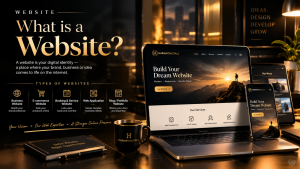
A thoughtfully designed website can help build credibility, improve customer experience, showcase your expertise, and create opportunities for new enquiries. It also gives your brand a place where your visual identity, message, services, and values can come together naturally.
A website is available around the clock, which means your business can remain visible even when your physical office is closed. With useful content, clear navigation, and a simple contact process, visitors can explore your business whenever it is convenient for them.
A professional website gives your business a strong and consistent presence online. It allows customers to discover your services at their convenience and provides important information without depending entirely on traditional communication methods.
Types of Websites
Every business has different requirements, so there is no single type of website that works for everyone. Websites can be designed around different purposes, audiences, industries, and business models. Some focus on information and branding, while others are created for selling products, providing services, collecting enquiries, or delivering complete online applications.
1. Business Website
A business website is designed to present a company and its services in a professional and organised manner. It normally includes pages such as Home, About Us, Services, Portfolio, Testimonials, Blog, and Contact.
A well-structured business website helps visitors understand the company quickly and gives them an easy way to get in touch. It is suitable for agencies, consultants, service providers, local businesses, start ups, and established companies.
2. E-Commerce Website
An e-commerce website allows businesses to sell products or services online. Customers can browse products, view prices and details, add items to a cart, and complete purchases through an online payment system.
A successful e-commerce website focuses on product presentation, simple navigation, secure transactions, mobile responsiveness, and a smooth checkout experience. It can help businesses reach customers beyond their physical location and build a convenient online shopping experience.
3. Portfolio Website
A portfolio website is created to showcase skills, experience, projects, and achievements. Designers, photographers, developers, writers, architects, artists, and other professionals often use portfolio websites to present their work.
Instead of simply describing what someone can do, a portfolio allows visitors to see the quality and style of previous work. A clean layout, strong visuals, and easy navigation can make a portfolio feel professional without becoming complicated.
4. Landing Page
A landing page is a focused webpage created for a particular campaign, service, product, or marketing goal. Unlike a traditional website with many sections, a landing page usually concentrates on one main message and one primary action.
It may encourage visitors to make an enquiry, register for an event, download something, request a service, or purchase a product. Clear messaging, attractive design, strong calls to action, and a simple user journey are important elements of an effective landing page.
5. Blog Website
A blog website focuses mainly on publishing articles, guides, opinions, educational resources, news, or industry-related information. Blogs can be used by individuals, companies, professionals, and organisations.
For businesses, useful blog content can also support SEO by creating more opportunities to appear in relevant search results. A well-maintained blog can educate visitors, demonstrate knowledge, answer common questions, and build a stronger connection with an audience.
6. Educational Website
Educational websites are designed to provide learning resources, courses, tutorials, lessons, or academic information. Schools, colleges, training institutes, educators, and online learning platforms may use this type of website.
Modern educational websites can include video lessons, downloadable resources, quizzes, student accounts, course management, and online assessments. The goal is to make learning more accessible and organised for students.
7. Booking & Service Website
A booking and service website allows customers to explore services and schedule appointments or bookings online. It can be useful for salons, hotels, consultants, clinics, travel businesses, restaurants, repair services, and many other service-based businesses.
These websites are designed around convenience. Customers can view available services, understand pricing or details, choose a suitable time, and submit their information through a simple booking process.
8. Web Application
A web application is more advanced than a traditional informational website. It allows users to interact with features, data, accounts, dashboards, or business systems directly through a web browser.
Examples include customer portals, project management systems, online calculators, learning platforms, booking systems, and business dashboards. Web applications are generally built with more complex technologies and are customised according to specific requirements.
9. Membership Website
A membership website provides selected content, services, or resources to registered users. Visitors may create an account and access information according to their membership level.
This type of website can be useful for online communities, professional organisations, educational platforms, subscription services, and specialised content providers. Secure login systems and user management are important parts of the overall experience.
10. News & Magazine Website
News and magazine websites are created to publish a large amount of regularly updated content. They may cover business, technology, entertainment, lifestyle, sports, education, or other subjects.
These websites usually require strong content organisation, categories, search functionality, author sections, and a responsive design that makes reading comfortable across different devices.
Choosing the Right Website
Choosing the right type of website depends on what you want your digital presence to achieve. A small service business may only need a clean and professional business website, while an online store may require a complete e-commerce platform. A creative professional may benefit from a portfolio, while a company with a unique digital process may need a custom web application.
The important thing is not to build a website simply because everyone has one. A website should have a clear purpose and provide genuine value to its visitors. Good planning helps determine the right structure, features, content, design, and technology before development begins.
A Website Built Around Your Goals
A premium website does not have to be complicated. It should feel clear, natural, reliable, and comfortable to use. Every element—from typography and images to navigation and functionality—should work together to create a consistent experience.
Whether you need a business website, e-commerce platform, portfolio, landing page, booking system, or custom web application, the right approach begins with understanding your business and your audience.
At Harshit Digitals, the focus is on creating modern digital experiences that combine thoughtful design, practical functionality, responsive development, and a strong online presence. The aim is simple: to create websites that look refined, work smoothly, and give businesses a meaningful place to grow online.