Driving Growth Through Smart Digital Marketing

SEO Introduction
SEO, or Search Engine Optimization, is the process of improving a website’s visibility on search engines.
It helps your website appear in relevant search results when people look for specific information, products, or services.
The main goal of SEO is to attract the right audience through organic search traffic.
It focuses on understanding what users search for and what they actually need.
SEO includes keyword research, content optimization, technical improvements, and link building.
Well-optimized content helps search engines understand the purpose and relevance of each page.
A strong website structure makes it easier for both users and search engines to navigate your website.
SEO also focuses on website speed, mobile experience, security, and overall performance.
Local SEO helps businesses become more visible to customers searching within a specific location.
Quality content plays an important role in building trust and providing genuine value to visitors.
SEO can improve a website’s search visibility without depending entirely on paid advertisements.
It also helps businesses build a stronger and more credible online presence.
SEO performance is regularly monitored through traffic, rankings, clicks, and other useful insights.
Since search trends and algorithms change, SEO requires continuous improvement and adaptation.
It is a long-term digital strategy focused on sustainable visibility and meaningful growth.
Ultimately, SEO connects your business with the right people at the right time through search.
How To Search Engine Working
Search engines help people find the most useful information on the internet.
They mainly work through three important steps: Crawling, Indexing, and Ranking.
1. Crawling: Search engines use bots to discover websites and find new or updated pages.
These bots follow links from one page to another to understand what content is available.
2. Indexing: After discovering a page, the search engine analyzes its content and stores useful information in its database.
This helps the search engine understand what the page is about and when it may be useful.
3. Ranking: When someone searches for something, the search engine checks its index and selects relevant pages.
It then organizes the results based on factors such as relevance, content quality, and user experience.In simple terms:
Search engines discover content, understand it, and then show the most relevant results to users.
Search Intent
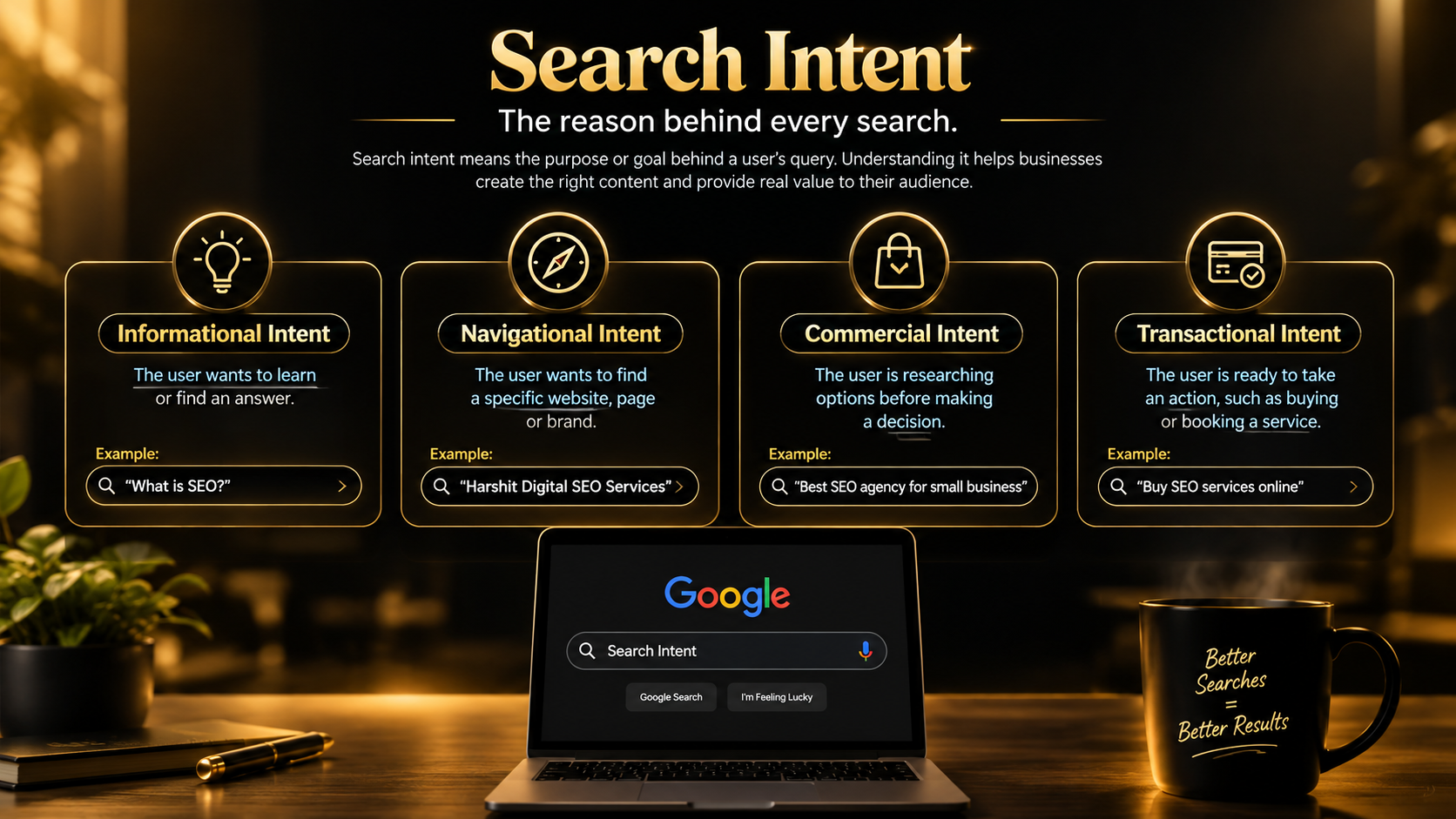
Search Intent means the reason or purpose behind a user’s search query.
Understanding search intent helps businesses create content that matches what users are actually looking for.
There are four main types of search intent:
1. Informational Intent – The user wants to learn or find an answer.
Example: “What is SEO?”
2. Navigational Intent – The user wants to find a specific website, page, or brand.
Example: “Harshit Digitals SEO Services”
3. Commercial Intent – The user is researching options before making a decision.
Example: “Best SEO agency for small business”
4. Transactional Intent – The user is ready to take an action, such as buying or booking a service.
Example: “Buy SEO services online”
Keyword Research
Keyword Research is the process of finding the words and phrases people use when searching online.
It helps businesses understand their audience and create content around real search demand.
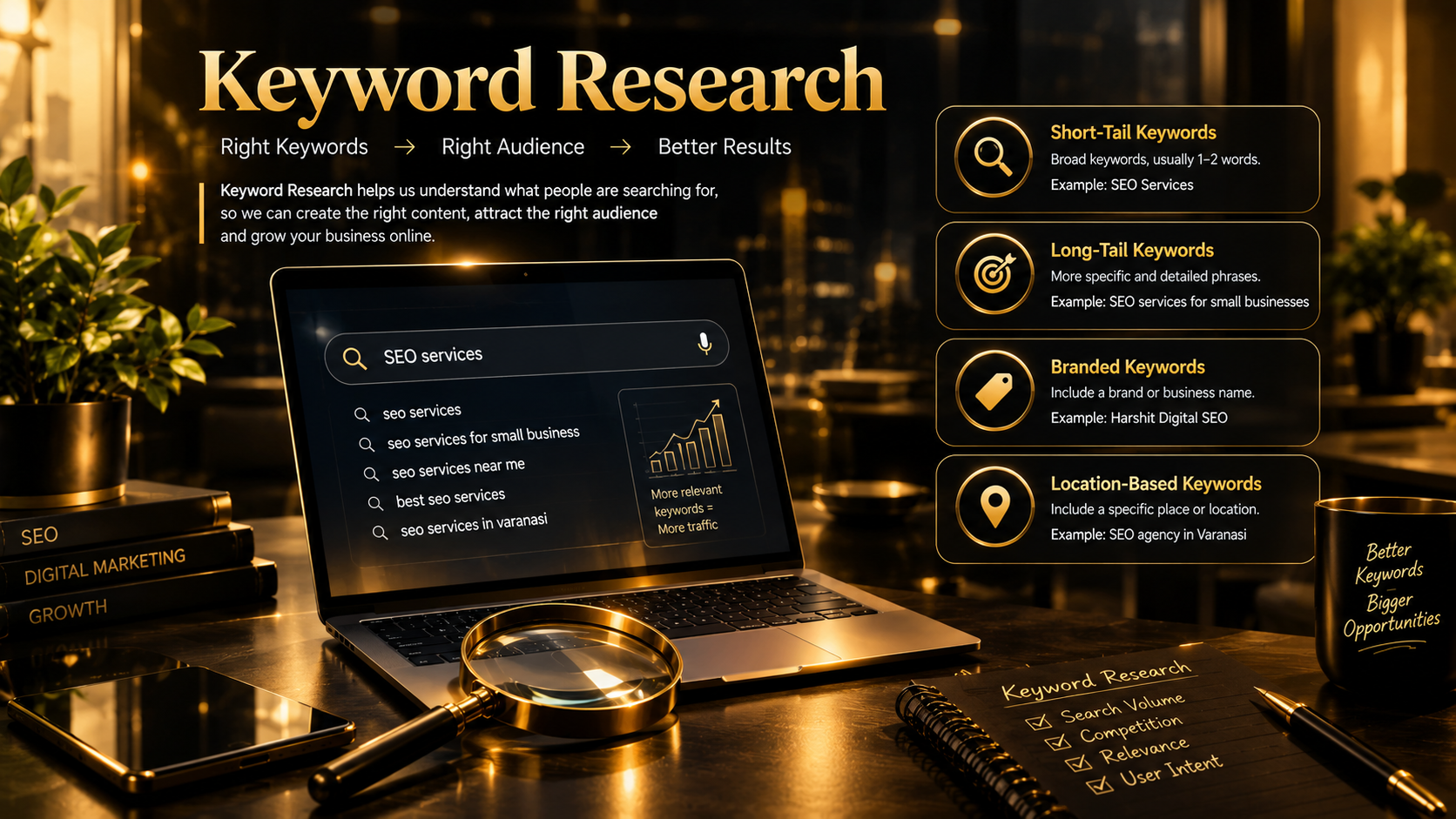
Short-Tail Keywords are broad and usually contain one or two words, such as “SEO Services.”
Long-Tail Keywords are more specific phrases, such as “SEO services for small businesses.”
Branded Keywords include a specific brand or business name, such as “Harshit Digitals SEO.”
Location-Based Keywords include a specific place, such as “SEO agency in Varanasi.”
Keyword research also helps identify search volume, competition, relevance, and user intent.
Choosing the right keywords allows a website to target the right audience with more relevant content.
A smart keyword strategy creates a strong foundation for SEO, content planning, and organic growth.
Types of SEO
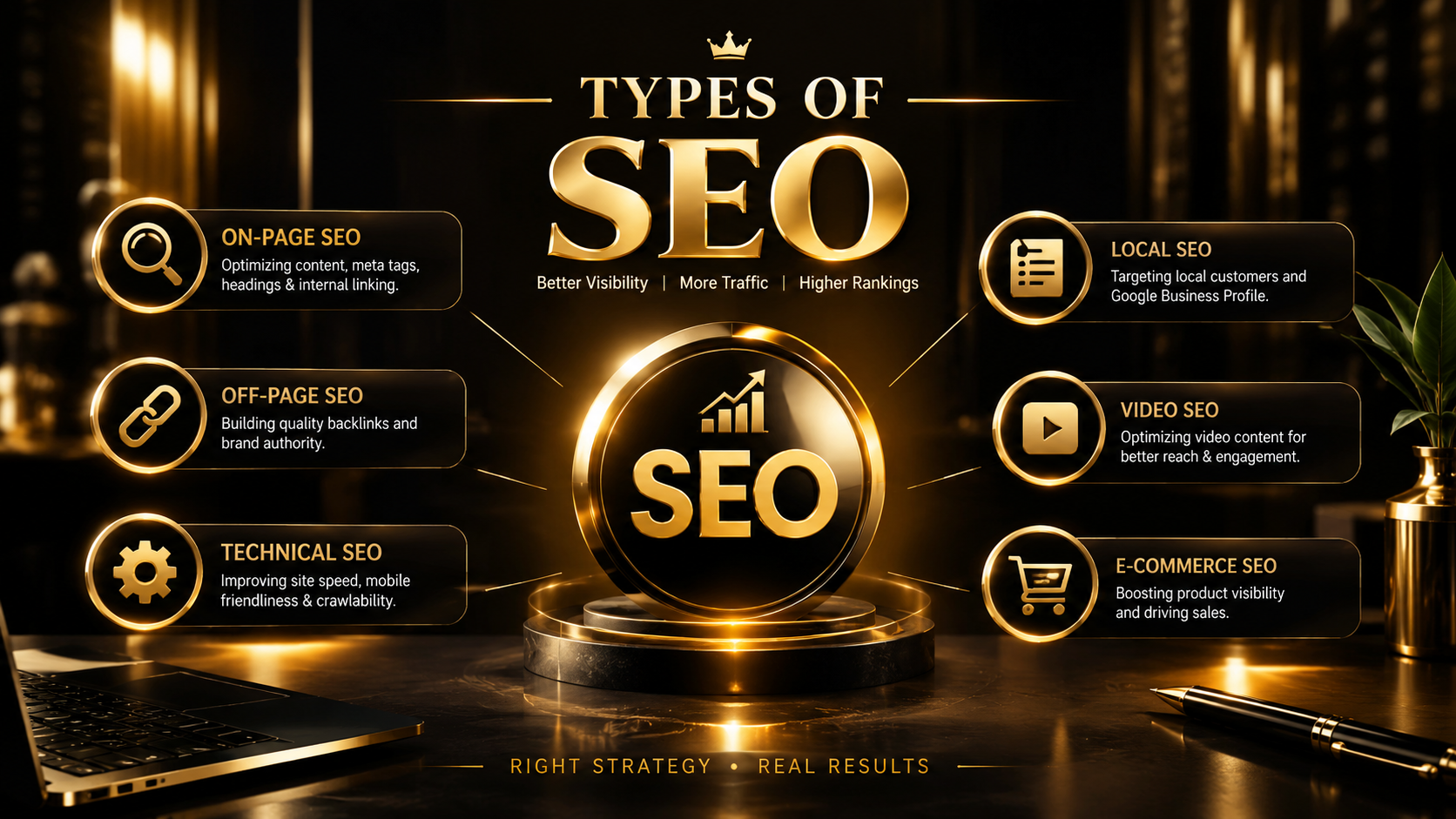
Short Definitions
1.On-Page SEO — Optimizing website content, keywords, headings, images, and internal links to improve search visibility.
2.Off-Page SEO — Building website authority through backlinks, mentions, and other activities outside the website.
3.Technical SEO — Improving the website’s technical performance, such as speed, mobile-friendliness, crawling, and indexing.
4. Local SEO — Optimizing a business’s online presence to appear in local searches and attract nearby customers.
5. E-commerce SEO — Optimizing online stores, product pages, categories, and descriptions to increase organic traffic and sales.
On-Page SEO
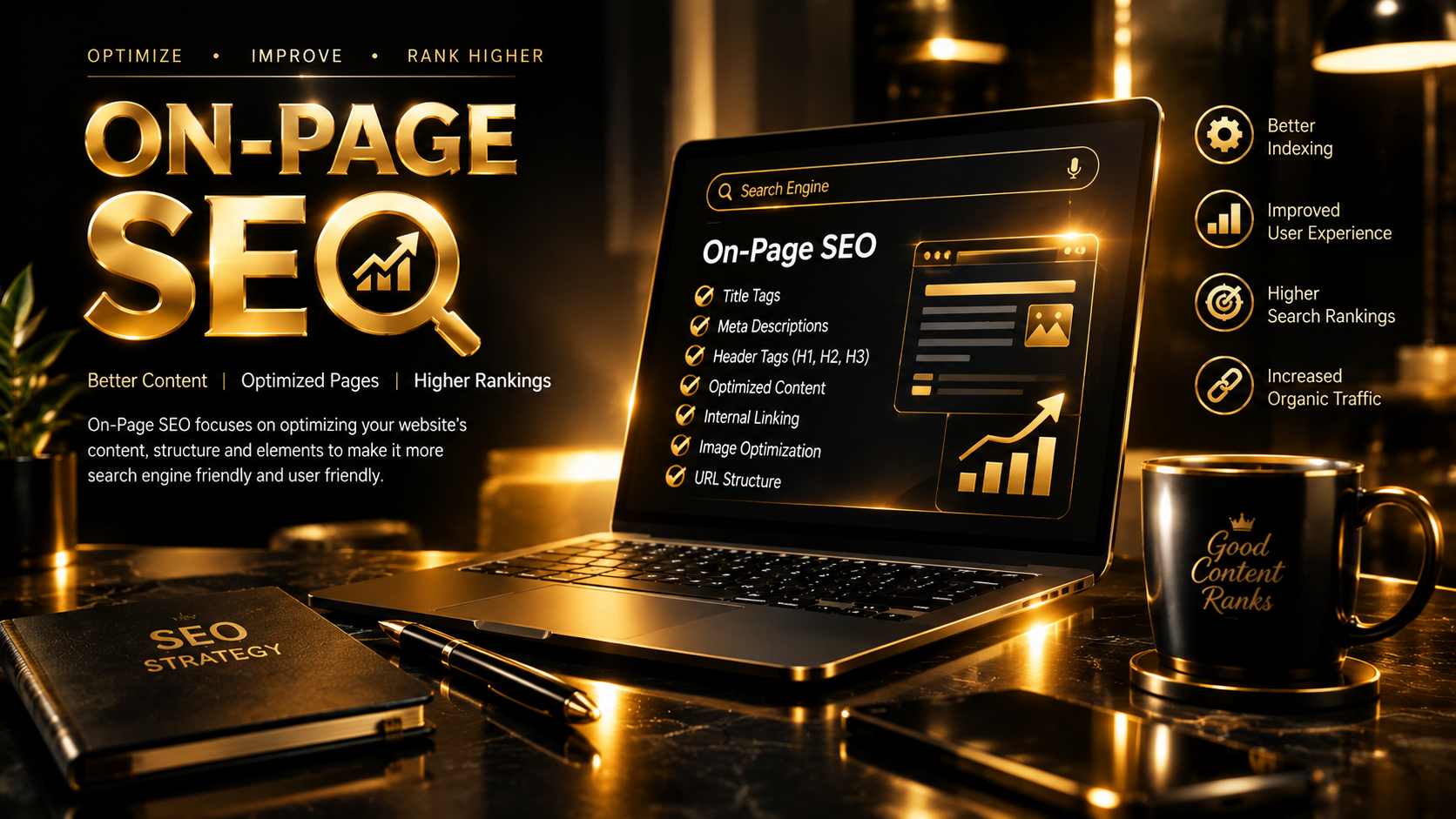
On-Page SEO is the process of optimizing elements within a website to improve its visibility in search engines. It helps search engines understand the content, purpose, and relevance of each webpage. The process includes using relevant keywords naturally throughout the content. Page titles and meta descriptions are optimized to clearly communicate what a page is about. Proper headings and subheadings create a well-structured and easy-to-read experience. Images are optimized with descriptive file names and alt text. Internal links connect related pages and improve website navigation. SEO-friendly URLs make page topics clear to both users and search engines. High-quality, relevant content provides real value to visitors. Mobile-friendly design and a smooth page experience also support effective optimization. Overall, On-Page SEO improves search visibility, content relevance, user experience, and organic growth
Off-Page SEO
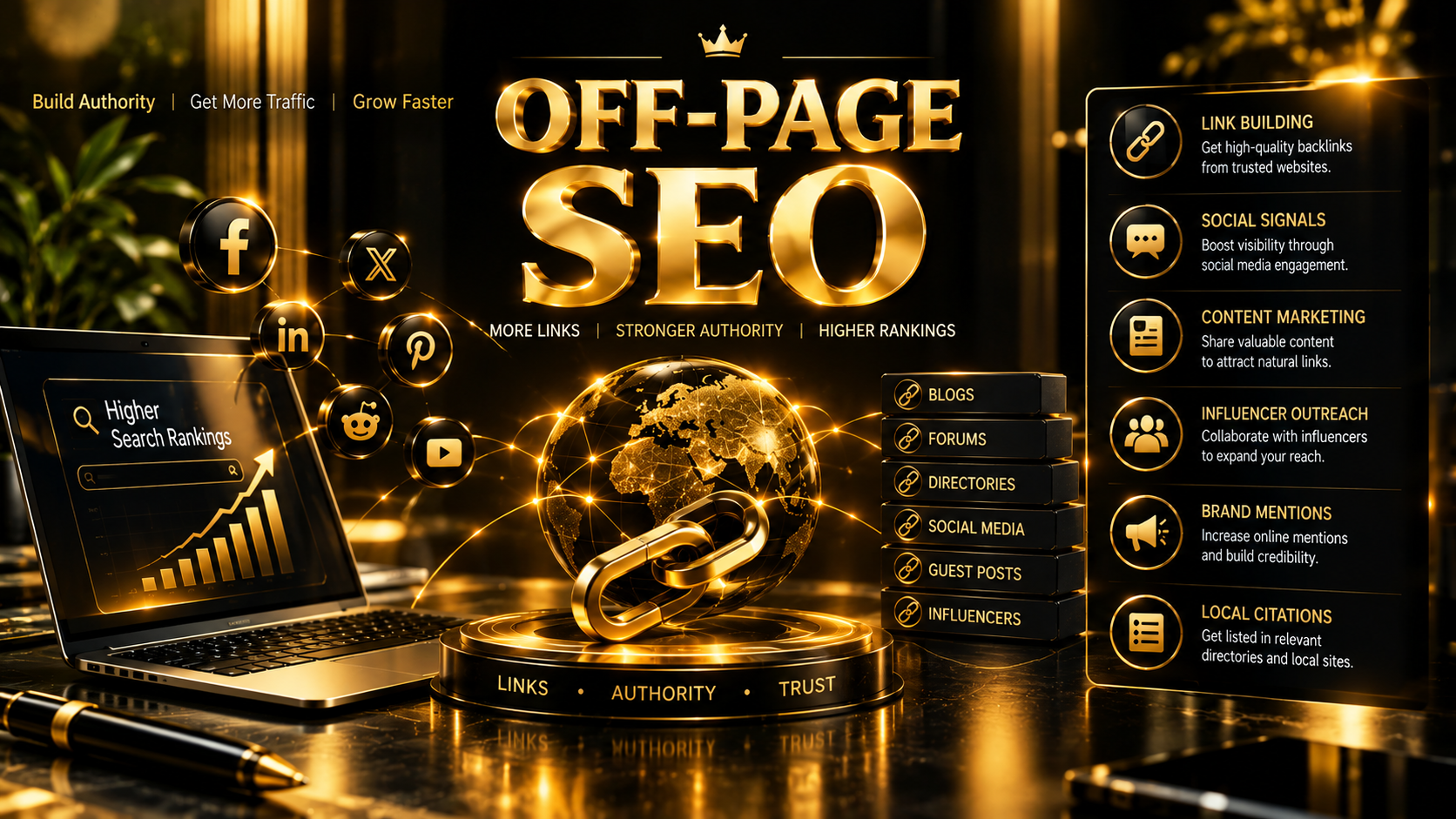
Off-Page SEO refers to activities performed outside a website to improve its search engine visibility and authority. It helps search engines understand how trustworthy and valuable a website is within its industry. A major part of Off-Page SEO is building high-quality backlinks from relevant and reliable websites. Brand mentions, online directories, guest posting, and digital PR can also strengthen a website’s online presence. Social media engagement can help increase content visibility and attract more visitors. Reviews and business listings are especially useful for building credibility and supporting local visibility. The focus is not simply on getting more links, but on earning relevant and trustworthy references. A strong Off-Page SEO strategy can improve a website’s reputation and authority over time. It also helps attract referral traffic from other online platforms. Consistent and genuine link-building efforts are more valuable than low-quality or spammy techniques. Overall, Off-Page SEO supports authority, credibility, visibility, and long-term organic growth.
Technical SEO
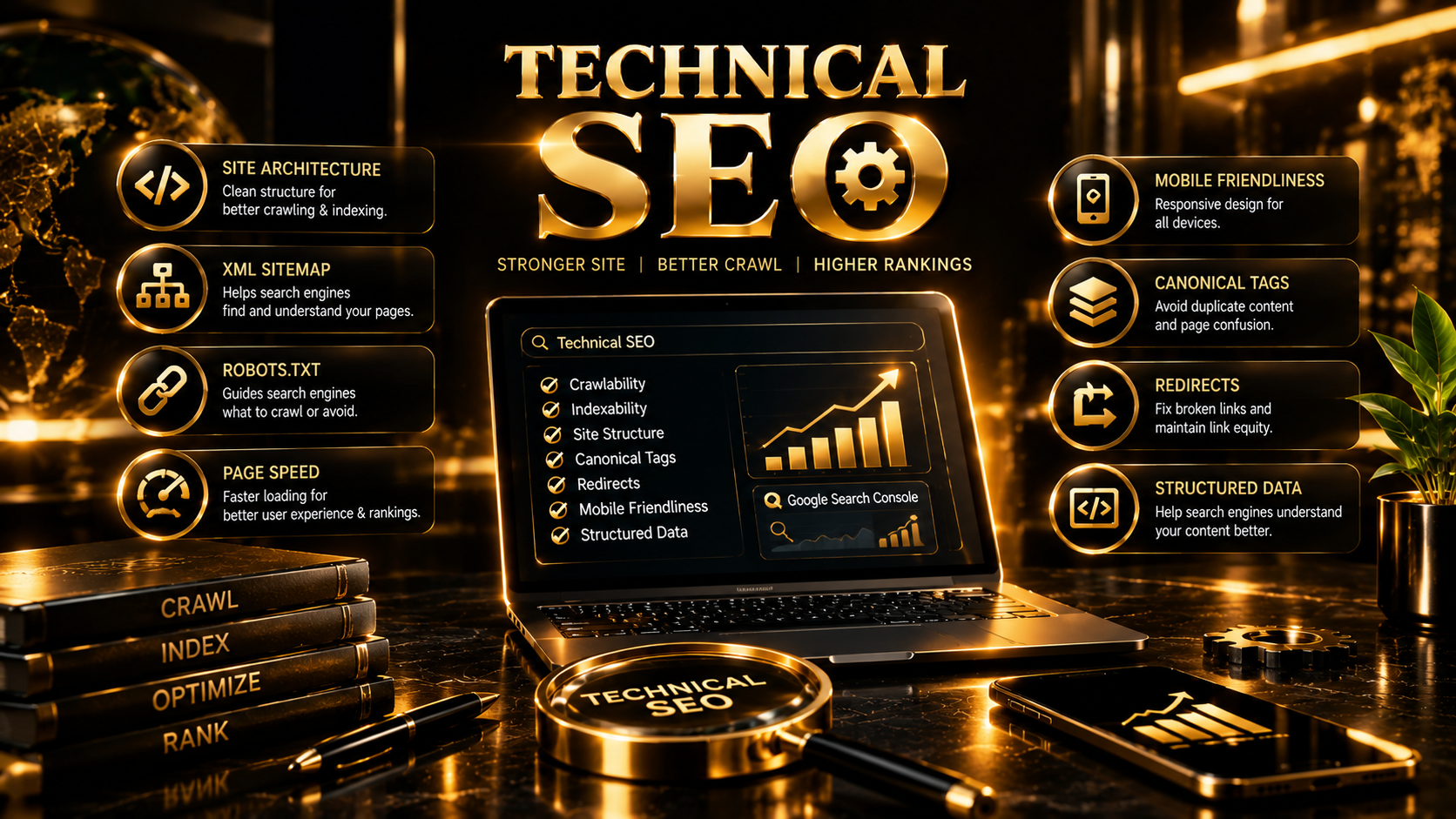
Technical SEO focuses on optimizing the technical foundation of a website so search engines can efficiently crawl, understand, and index its pages. It ensures that the website structure is clean, accessible, and search-engine friendly. Key elements include website speed, mobile responsiveness, crawlability, indexability, and secure HTTPS. A well-organized site structure helps search engines discover important pages more effectively. XML sitemaps guide search engines toward the pages that should be indexed. Robots.txt helps manage which areas of a website search engines can access. Proper redirects and canonical tags help prevent indexing and duplicate-content issues. Core Web Vitals and overall page performance contribute to a smoother user experience. Structured data can also help search engines understand specific information on a webpage. Regular technical audits help identify and resolve issues that may affect organic visibility. Overall, Technical SEO creates a strong, efficient, and search-friendly foundation for long-term website performance.
Locial SEO

Local SEO helps a business build a strong presence in its target location.
It focuses on making a business more visible when people search for nearby products or services.
A well-optimized Google Business Profile helps customers easily find essential business information.
Local keywords connect the business with searches related to specific cities, areas, or locations.
Positive customer reviews can build trust, credibility, and local reputation.
Accurate business details such as address, phone number, and working hours improve the customer experience.
Local citations and relevant directories can strengthen a business’s online presence.
Location-based content helps search engines understand where the business operates.
A strong local SEO strategy can attract highly relevant nearby customers.
It also helps businesses compete more effectively within their local market.
The ultimate goal is to turn local online searches into real visits, enquiries, and customers.
E-commerce SEO
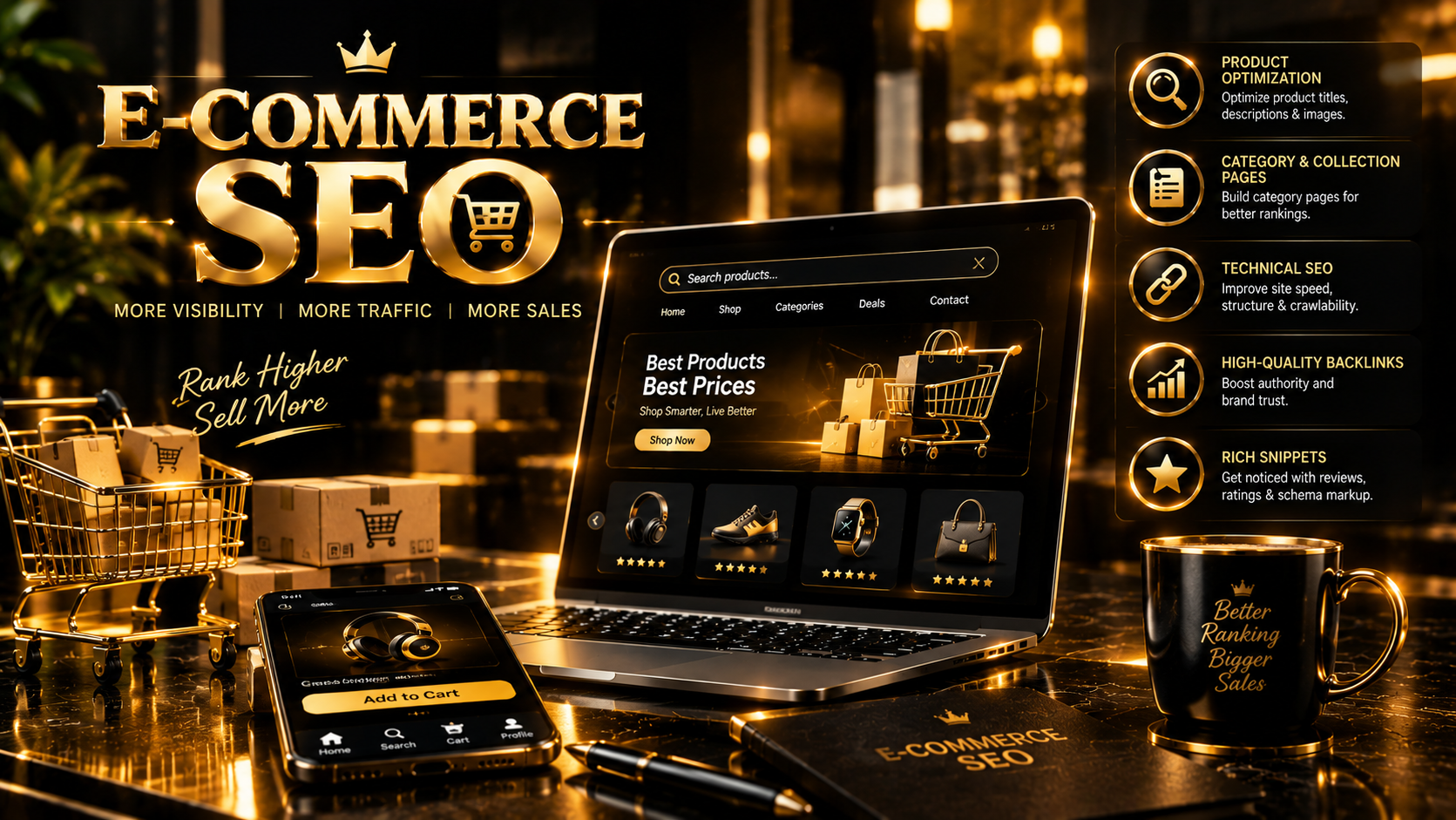
E-commerce SEO focuses on improving the visibility of an online store in search engine results.
It helps potential customers discover products while searching for relevant items online.
A strong strategy includes keyword research, product optimization, technical SEO, and quality content.
Well-structured product titles and descriptions make products easier for both users and search engines to understand.
Optimized images, URLs, and category pages can create a smoother shopping experience.
Fast loading speed and mobile-friendly design are important for better usability and performance.
Product reviews and useful content can build trust and strengthen online credibility.
Internal linking helps customers navigate between related products and categories.
Technical optimization ensures that search engines can properly crawl and index the store.
Effective E-commerce SEO can increase organic traffic and qualified product visibility.
The goal is to connect the right products with the right customers at the right moment.
White Hat vs Black Hat SEO
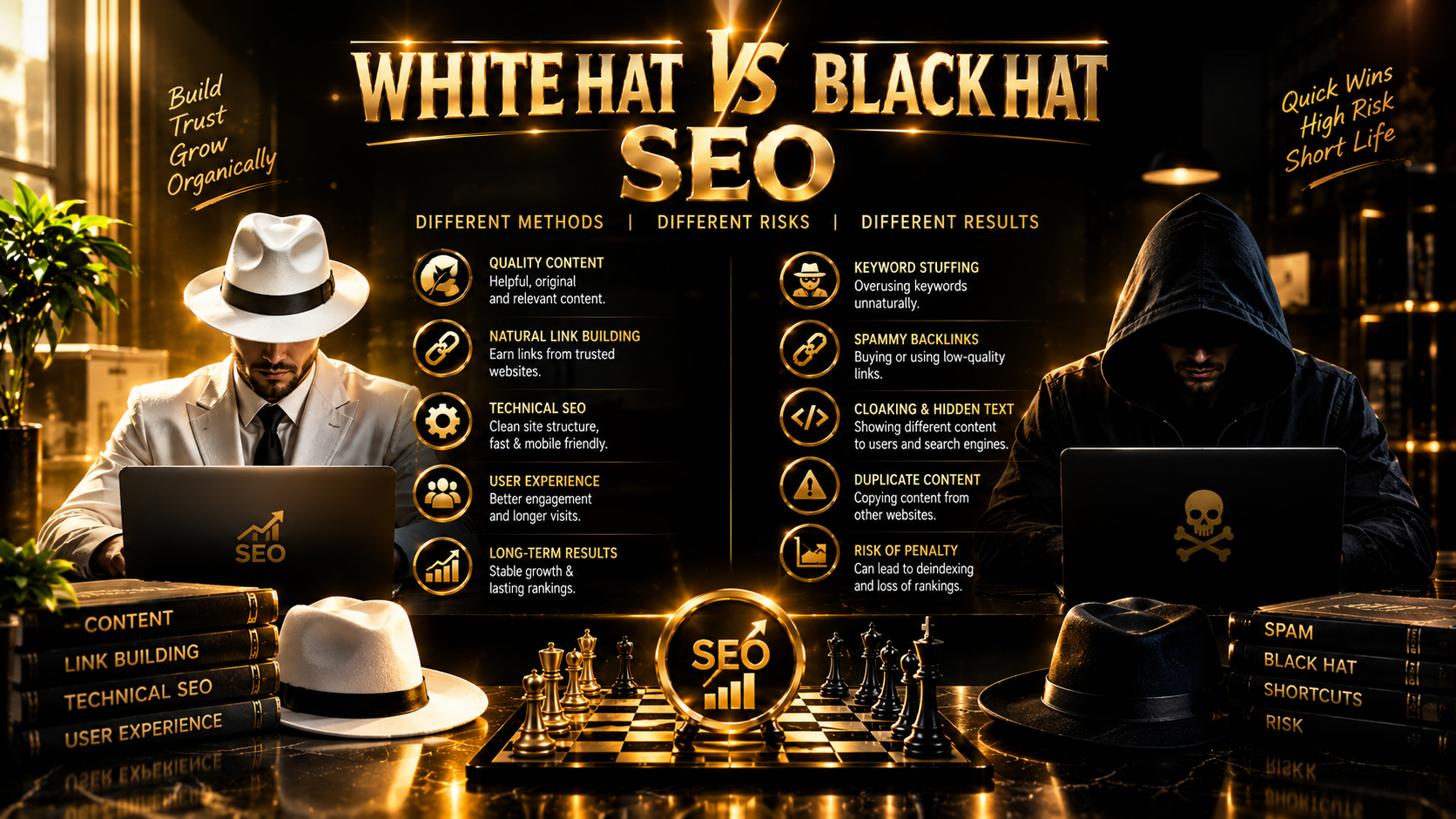
White Hat SEO focuses on ethical, sustainable strategies that follow search engine guidelines.
It prioritizes quality content, genuine optimization, relevant keywords, and a better user experience.
These practices are designed to build long-term visibility and lasting search performance.
Black Hat SEO, in contrast, uses manipulative techniques to gain rankings quickly.
These may include keyword stuffing, hidden content, spammy links, or other deceptive practices.
While such methods may sometimes produce short-term changes, they can create serious risks for a website.
Search engines may detect and reduce the visibility of websites using manipulative tactics.
White Hat SEO builds authority through relevance, trust, and consistent value.
Black Hat SEO focuses more on exploiting ranking weaknesses than improving genuine user value.
For a professional website, understanding this difference is important for building a reliable SEO strategy
White Hat
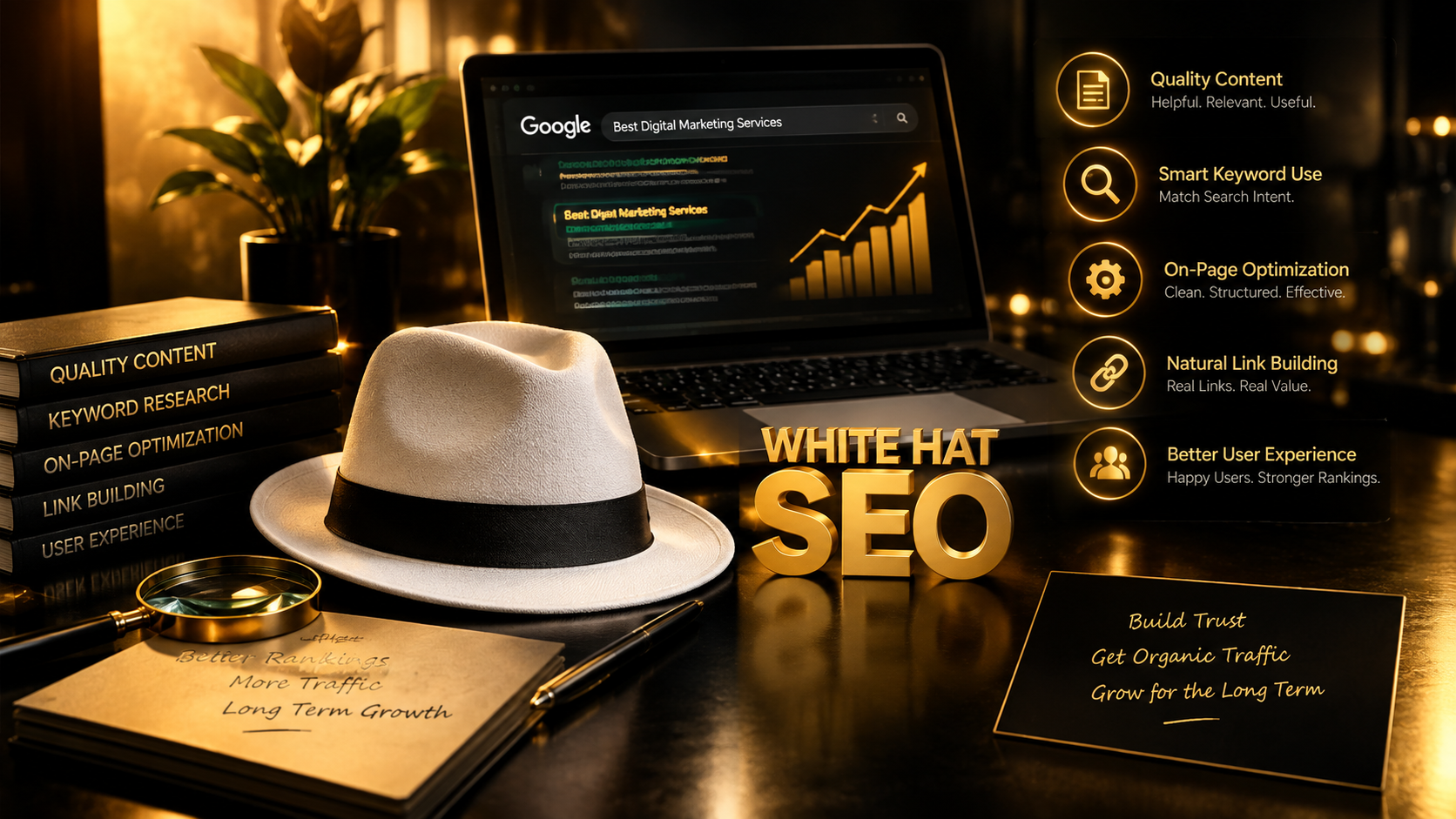
White Hat SEO is a genuine and sustainable approach to improving a website’s search engine visibility.
It follows search engine guidelines while focusing on providing real value to users.
The strategy includes quality content, relevant keywords, proper on-page optimization, and ethical link building.
It helps search engines understand a website and connect it with relevant searches.
White Hat SEO also focuses on creating a smooth and useful user experience.
Instead of looking for shortcuts, it builds website authority through consistent and meaningful work.
Well-optimized content can attract visitors who are genuinely interested in the information or services offered.
Over time, these practices can strengthen a website’s trust, relevance, and organic presence.
It is a long-term process that requires patience, consistency, and continuous improvement.
For businesses, White Hat SEO provides a reliable foundation for lasting online growth.
Black Hat

Black Hat SEO uses manipulative optimization techniques to influence search engine rankings.
It focuses on finding shortcuts instead of building genuine value for users.
Common practices include keyword stuffing, cloaking, hidden content, and unnatural link building.
These methods attempt to exploit weaknesses in search engine algorithms.
Although they may create short-term ranking improvements, the results are often unstable.
Search engines can identify manipulative patterns and take action against websites using them.
This may lead to ranking drops, reduced visibility, or removal from search results.
Black Hat SEO can also affect a website’s credibility and overall user experience.
Unlike sustainable SEO, it places greater emphasis on quick gains rather than long-term growth.
Understanding these practices helps businesses avoid risky strategies and protect their online presence